

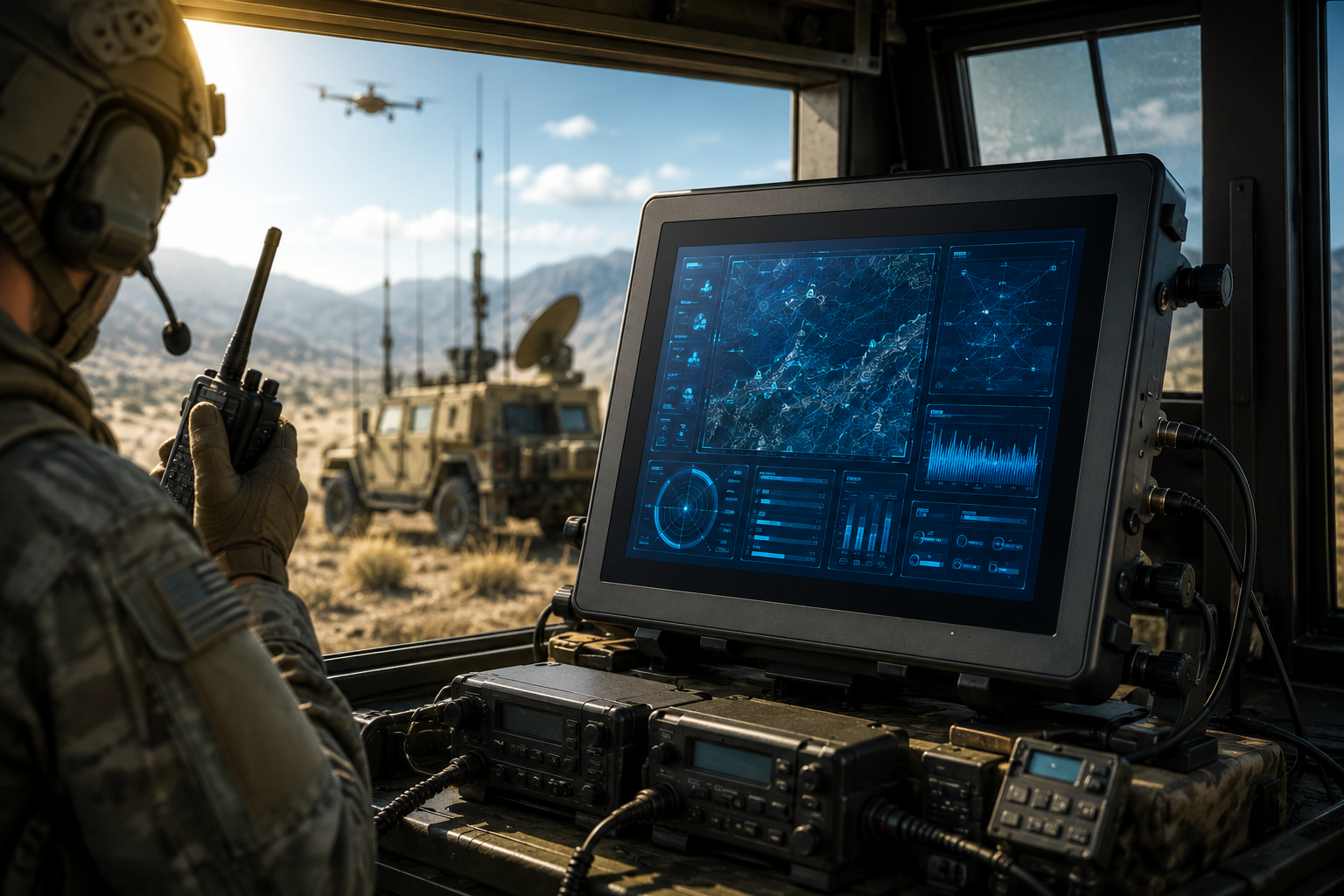
How Military-Grade Panel PCs Improve Field Communication Systems?
Field communications are the nervous system of modern military operations. When they work, commanders see the battlefield clearly, units stay coordinated, and missions succeed.
When they fail, the consequences are severe. Military-grade panel PCs are increasingly at the center of field communication infrastructure and for good reason.
The Problem with Standard Computing in Field Comm Systems
Civilian-grade computers were engineered for offices. Field communications environments are the exact opposite:
- Temperature extremes from desert heat to arctic cold
- Dust, sand, and moisture that infiltrate standard ventilation systems
- Vibration and shock from vehicle transport, weapons discharge, or rough terrain
- Electromagnetic interference from nearby radio transmitters, radar systems, and EW equipment
- Power instability from generators and vehicle electrical systems
Deploying a standard commercial computer in these conditions isn’t a calculated risk — it’s a guarantee of failure. Military-grade panel PCs eliminate these vulnerabilities through purpose-built engineering.
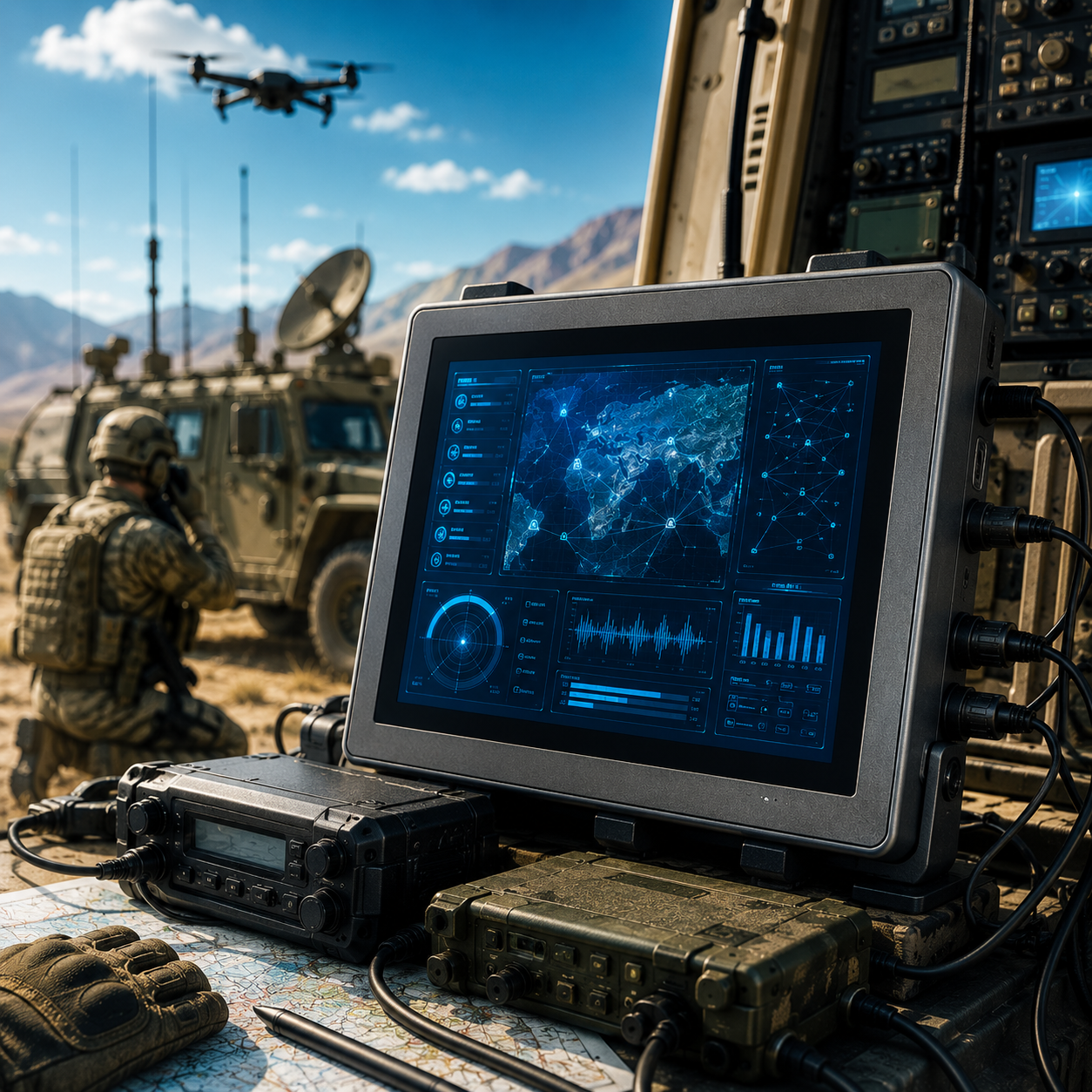
How Military-Grade Panel PCs Enhance Field Comms
1. EMI/RFI Shielding Prevents Signal Corruption
- A military-grade panel PC built to MIL-STD-461 standards provides electromagnetic shielding that prevents the computing unit itself from interfering with adjacent radio and communications equipment — and vice versa. In a comm vehicle where multiple radios, satellite terminals, and data links operate simultaneously, this is critical.
2. Sealed Enclosures Keep Systems Running in Harsh Conditions
- IP65 and IP67-rated enclosures prevent dust and water ingress that would destroy conventional hardware. Field communication nodes often operate outdoors, in vehicles, or in hastily-constructed shelters where environmental control is impossible.
3. Wide-Temperature Operation Maintains Uptime
- Communication systems can’t go offline because ambient temperature spiked or dropped. Military-grade panel PCs rated for -20°C to 60°C (or wider) maintain full operation across the temperature ranges encountered in global deployment.
4. High-Brightness Displays Support Operator Effectiveness
- Field comm operators need to read their screens quickly and accurately under any lighting condition. Sunlight-readable displays rated at 1,000+ nits eliminate the squinting and misreads that cost time in high-pressure situations.
5. Fanless Designs Reduce Acoustic and Mechanical Signatures
- In sensitive field environments, fan noise and thermal signatures matter. Fanless panel PCs run silent and cool without creating audible noise or additional heat sources that could compromise operational security.
6. Multiple Serial and Ethernet Ports Connect Legacy and Modern Comms
- Field communication systems still run a lot of legacy hardware — RS-232, RS-422, RS-485 serial protocols remain common in military radio interfaces. Military-grade panel PCs with multiple serial ports bridge old and new systems without adapters.
Real-World Field Comm Scenarios
- Tactical Operations Centers (TOC) The TOC is the nerve center of a deployed unit. Panel PCs run situational awareness software, Blue Force Tracker displays, and encrypted messaging terminals simultaneously.
- SATCOM Terminals Satellite communication terminals need computing hardware that can manage modems, encryption devices, and routing equipment across temperature extremes without dropping data links.
- Combat Net Radio Integration Connecting digital battlefield management systems to analog and digital radio nets requires hardware with the right I/O and the processing power to handle real-time voice and data bridging.
DITHD Field Communication Panel PC Solutions
DITHD supplies military-grade panel PCs engineered for field communication system integration. MIL-STD-461 EMI compliance, wide-temperature operation, fanless cooling, and multi-port I/O configurations are available across their rugged computing lineup.
- Phone: 760-599-9225
- Email: sales@dithd.com
- Get in touch
Frequently Asked Questions
How do military-grade panel PCs reduce interference in field communication systems?
- By meeting MIL-STD-461 electromagnetic compatibility standards, military-grade panel PCs are shielded against both emitting interference to and receiving interference from adjacent radio and communication equipment.
Why is a fanless design important for field communication computers?
- Fanless designs eliminate dust ingestion, reduce noise, and remove a mechanical failure point — all critical for continuous, unattended operation in field comm environments.
Does DITHD offer panel PCs suitable for field communication systems?
- Yes. Contact DITHD or call 760-599-9225 to discuss your field comms hardware requirements.
CTA
Don’t let hardware failure break your field comms. Connect with DITHD and get military-grade panel PCs built to keep your systems online.

Leave a comment