

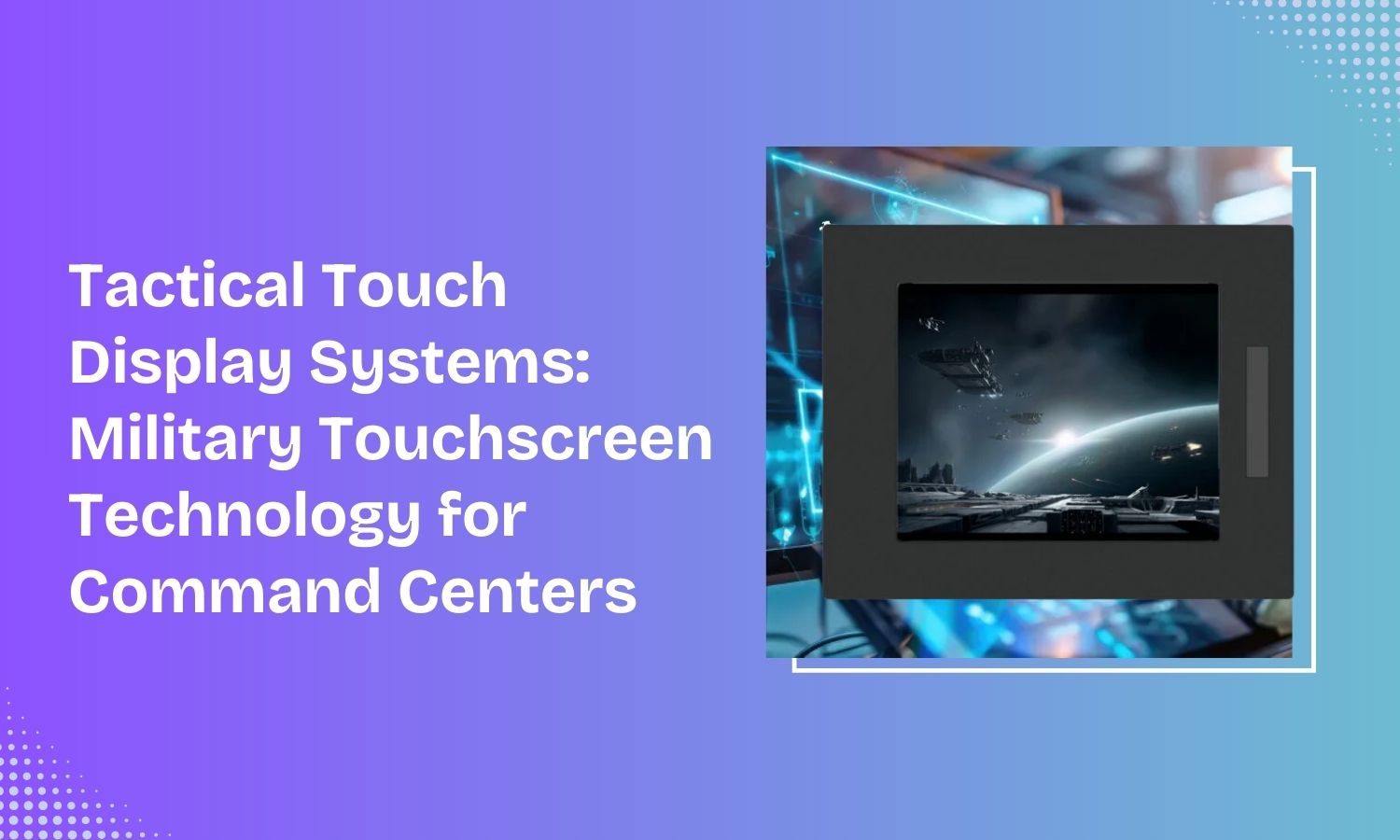
Tactical Touch Display Systems: Military Touchscreen Technology for Command Centers
In modern military command centers, operators must interpret data quickly, coordinate units effectively, and act with precision — often under high stress. Tactical touch display systems provide intuitive, responsive interfaces that support critical decision-making, streamline workflows, and enhance operator situational awareness in both stationary and mobile command environments.
This guide explains how military touchscreen technologies power operations, what features matter most, and how rugged solutions from DITHD support mission success.
What Are Tactical Touch Display Systems?
Tactical touch displays are ruggedized LCD monitors with touchscreen input technology that enables direct interaction with mission applications. Unlike basic monitors, these systems combine:
- High durability against shock, vibration, and thermal extremes.
- Glove-friendly touch interaction for tactical use.
- Sunlight readability or NVIS compatibility for day/night operations.
- Panel mount or rack mount options for flexible deployment.
These systems are designed for command centers, mobile operations trucks, tactical vehicles, headquarters shelters, and field racks where touch interaction speeds response times and reduces operator error.
Why Touchscreens Are Critical in Command Centers
Command centers aggregate vast amounts of data — maps, sensors, ISR feeds, communications, and logistics. Traditional input devices like keyboards or mice introduce delays. Touchscreens allow commanders and technicians to:
- Quickly navigate situational overlays.
- Zoom and pan across multi-layer maps.
- Acknowledge alerts with one touch.
- Interact intuitively with complex systems.
The result: faster decisions, greater coordination, and improved mission outcomes.
Explore Tactical Touch Displays
View rugged options in the Military Tactical Touch Monitor category.
Rugged Panel Mount Touch Monitors for Embedded Systems
Many defense platforms integrate displays directly into consoles, vehicles, or control panels. Panel mount touchscreen monitors provide secure, flush-fit displays that reduce cabling complexity and protect against environmental exposure.
These panel mounts are ideal for:
- Fixed tactical stations.
- Armored vehicle dashboards.
- Shipboard control panels.
- Integrated electronics consoles.
Highlighted Solution:
The PPC-PM121LC Panel Mount Touch Display combines rugged durability with responsive touchscreen performance for embedded command systems.
Contact for Panel Integration
Discuss embedded solutions with sales@dithd.com.
Key Features That Define Military Touchscreen Technology
1. Glove-Friendly Touch Interfaces
Operators routinely wear gloves for protection or environmental conditions. Touch systems must detect input accurately without sacrifice.
Featured rugged touch displays:
-
Select devices in Military Tactical Touch Monitor category
2. Sunlight-Readable and NVIS-Compatible Displays
Touchscreens in command centers may transition from indoor briefing rooms to outdoor command posts. Displays that are both high-brightness and NVIS-compatible are essential for day/night versatility.
View Day/Night Displays
Explore product options at www.dithd.com.
3. IP-Rated and Shock-Resistant Construction
Tactical environments may expose monitors to dirt, water spray, and impact hazards. IP-rated displays with sealed interfaces protect electronics and extend operational lifetimes.
4. Integrated Mounting & Low Profile Design
Panel mounts and rack drawer options support clean installations for compact command hardware layouts.
Where Tactical Touch Displays Are Used
-
Joint Operations Command Centers
Centralized visual dashboards support allied coordination, fire control, and logistics. -
Mobile Tactical Units
Field deployable trucks and trailers require robust displays that work in vibration and temperature extremes. -
Armored Vehicle C4ISR Stations
Within armored platforms, touch technology replaces bulkier peripherals and reduces crew workload. -
Airborne and Naval Control Rooms
Long endurance missions benefit from seamless touch interaction across shared displays.
Integrating Touch Display Systems With Command Workflows
Successful deployment requires more than a rugged screen — it demands integrated systems that communicate reliably with tactical CPUs, GIS servers, sensor arrays, and secure networks.
Key integration considerations include:
- Multi-touch calibration and latency.
- Secure access control.
- Compatibility with command software.
- Remote display diagnostics.
- Redundant paths for signal and power.
DITHD works directly with defense integrators to tailor display systems that meet specific operational requirements.
Request Integration Assistance
Email dithd760@gmail.com for system planning support.
Why Commands Choose DITHD Tactical Displays
DITHD’s approach to rugged touchscreen technology includes:
- U.S. engineering for defense and tactical use.
- Long product lifecycle and support planning.
- Custom brightness, touch, and mounting options.
- MIL-STD shock, vibration, and thermal verification.
- Seamless integration with rack and panel environments.
Speak to a Tactical Display Specialist
Contact sales@dithd.com or call 760-599-9225.
Frequently Asked Questions (FAQ)
1. What makes a tactical touchscreen different from commercial touch monitors?
Military touchscreens are engineered for environmental extremes, glove interaction, high brightness, NVIS compatibility, and integrated rugged housing — unlike commercial devices designed for office or consumer use.
2. Are panel mount and rack mount touch displays interchangeable?
They serve different deployment formats. Panel mounts fit in control consoles and dashboards while rack mounts slide into tactical racks or command center cabinets.
3. Can these touch displays be integrated with existing command center architectures?
Yes. DITHD supports custom integration services, ensuring touchscreen systems communicate correctly with mission software and secure networks.
Get Project Support
Reach our engineering team at sales@dithd.com.

Leave a comment