

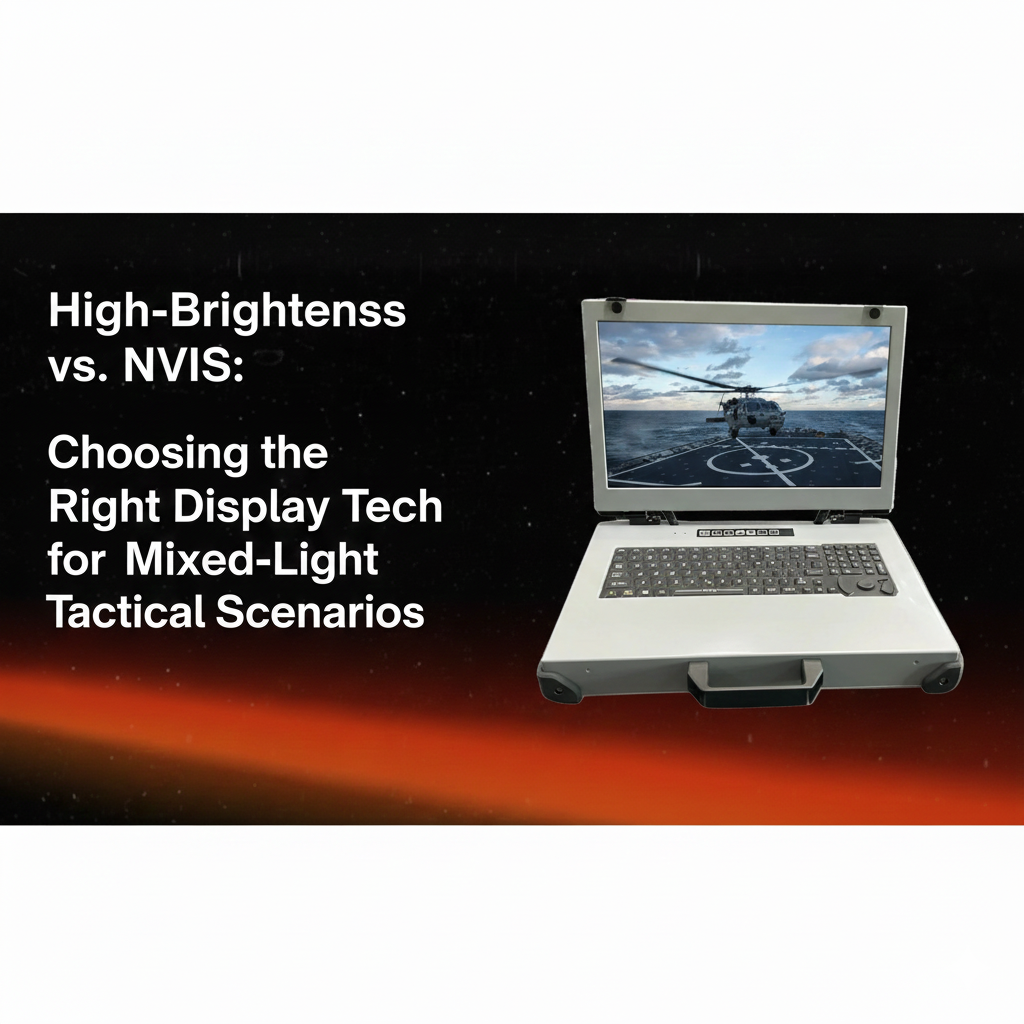
High-Brightness vs. NVIS: Choosing the Right Display Tech for Mixed-Light Tactical Scenarios
Modern defense missions often require operators to transition rapidly between bright daylight, shaded environments, and low-light or night-vision–assisted operations. Selecting the correct display technology High-Brightness or NVIS-Compatible directly impacts situational awareness, mission speed, and operator safety.
This guide explains the differences, use cases, and selection criteria, while recommending rugged DITHD display solutions engineered for mixed-light tactical environments.
Understanding High-Brightness Displays
High-brightness tactical monitors are engineered to remain fully visible under intense sunlight, floodlights, and reflective conditions. These displays often exceed 1,000–2,500 nits, significantly reducing glare and improving visibility in outdoor or open-hatch vehicle operations.
Key Benefits
- Clear visibility in direct sunlight.
- Enhanced readability for map overlays and ISR feeds.
- Improved accuracy in rapid-response field operations.
- Optional optical bonding for even greater clarity.
Ideal Use Cases
- Armored vehicle turrets.
- Naval deck stations.
- Forward-operating bases.
- Mobile command posts.
Recommended High-Brightness DITHD Solutions
Explore High-Brightness Displays
View full lineup: High-Brightness Tactical Displays
Understanding NVIS-Compatible Displays
NVIS (Night Vision Imaging System)–compatible displays are engineered to prevent blooming and light spill that could compromise night operations. They meet MIL-STD-3009 compliance to ensure safety and compatibility with military aviation night-vision goggles.
Key Benefits
- Zero blooming under NVG use.
- Preserved operator stealth in covert missions.
- Adjustable brightness ranging from ultra-low to tactical-high.
- Reduced pilot and crew eye strain at night.
Ideal Use Cases
- Cockpits and crew stations.
- Mission planning shelters.
- ISR night operations.
- Low-visibility convoy navigation.
Recommended NVIS DITHD Solutions
Explore NVIS-Ready Solutions
See military-certified NVIS displays: NVIS Solutions
Mixed-Light Tactical Scenarios: The Real Challenge
Many modern missions move from bright environments into dark, covert environments—sometimes in seconds. Operators need workflows that remain uninterrupted during these transitions.
Mixed-Light Pain Points
- Temporary blindness when switching from bright to dark environments.
- NVG interference from non-compliant screens.
- Inaccurate display readings under glare.
- Mission delays caused by manual brightness adjustments.
The Solution: Dual-Mode or Hybrid Displays
Advanced DITHD systems allow rapid switching between:
- Daylight mode (high-brightness).
- Night mode (NVIS-compatible).
This hybrid capability ensures stable visibility across demanding missions.
Recommended Hybrid Systems
- HYDRA Multi-Head KVM Drawers.
- Tactical Touch Monitors (Glove-Friendly & NVIS options).
- Mobile Graphics Platforms (MGP) for real-time tactical analytics.
View Hybrid & Dual-Mode Displays
Explore tactical multi-light solutions: Tactical Display Systems
Choosing the Right Technology
Selecting between High-Brightness and NVIS depends on mission-specific requirements, operating theaters, and visibility conditions.
When to Choose High-Brightness
- Daytime patrol.
- Coastal or naval operations.
- Open-terrain missions.
- High-glare cockpit environments.
When to Choose NVIS
- Nighttime airborne missions.
- Covert surveillance.
- Low-light convoy movements.
- Special operations planning.
When to Choose Hybrid
- 24/7 operations.
- Vehicle crew stations.
- Mission command centers.
- Operators regularly switching from day to night.
Final Recommendation
Defense programs operating across varying light conditions should consider dual-mode tactical displays to ensure mission continuity and operator safety. DITHD provides rugged, MIL-certified options to meet every visibility requirement with exceptional reliability.

Leave a comment